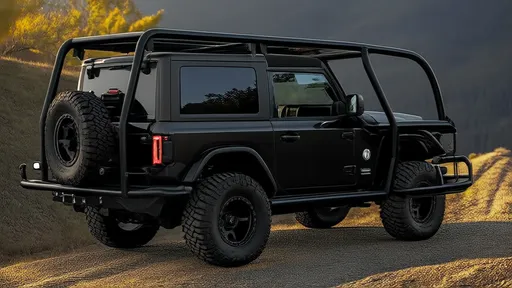
In the world of off-road driving, where unpredictable terrain and challenging conditions are the norm, safety is paramount. While modern vehicles come equipped with advanced safety features, enthusiasts who push their machines to the limit often seek additional protection. This is where roll cages, or roll bars, come into play—a critical safety redundancy for civilian vehicles that venture beyond the pavement.
The concept of a roll cage isn’t new. Originating in motorsports, these structures were designed to protect drivers in the event of a rollover or severe impact. Over time, the technology trickled down to the off-road community, where the risks are similarly high. Unlike factory-installed safety systems, which are designed for general use, a well-built roll cage offers a specialized layer of defense tailored to extreme conditions.
Why do civilian vehicles need roll cages? The answer lies in the inherent dangers of off-roading. When navigating rocky trails, steep inclines, or uneven surfaces, the chance of a rollover increases significantly. Stock vehicles, even those marketed as off-road-ready, often lack the structural reinforcement needed to withstand such incidents. A roll cage acts as a rigid skeleton, preventing the cabin from collapsing and safeguarding occupants when the unexpected happens.
One of the most compelling arguments for installing a roll cage is the difference it makes in survival rates. In a severe rollover, the roof of a standard vehicle can deform or crush, leading to catastrophic injuries. A properly designed cage distributes impact forces across its framework, maintaining survival space for passengers. This is particularly crucial in remote areas, where emergency response times may be delayed, and self-reliance is key.
Materials and construction play a pivotal role in the effectiveness of a roll cage. High-grade steel tubing is the go-to choice for its strength and ability to absorb energy. The design must balance rigidity with strategic flexibility—too stiff, and the cage could transmit excessive force to occupants; too weak, and it might fail under stress. Professional fabrication is essential, as DIY attempts often result in compromised safety due to improper welding or material selection.
Beyond pure safety, roll cages can enhance a vehicle’s versatility. Many off-roaders use them as mounting points for additional gear, such as spare tires, jerry cans, or recovery equipment. Some designs even incorporate integrated lighting or antenna mounts, turning the cage into a multifunctional asset. However, it’s crucial to remember that the primary purpose remains occupant protection—any added functionality should never compromise structural integrity.
The legal landscape surrounding roll cages in civilian vehicles varies by region. While motorsports often mandate their use, street-legal vehicles face stricter regulations. In many places, visible interior cages may require homologation or special permits due to potential risks in everyday driving (e.g., increased injury risk in low-speed collisions). Off-road-only vehicles have more flexibility, but enthusiasts should always research local laws before modification.
Maintenance is another often-overlooked aspect. A roll cage isn’t a "set it and forget it" addition. Regular inspections for cracks, rust, or deformation are necessary, especially after hard impacts. Paint or powder coating helps prevent corrosion, but any damage to these protective layers should be addressed promptly. In competitive environments, cages may need recertification periodically to ensure continued safety compliance.
As off-road culture grows globally, so does awareness of proper safety measures. Roll cages represent a mature approach to risk management—acknowledging that while skill and preparation reduce dangers, robust physical protection is the final line of defense. For those serious about exploring the limits, investing in a quality roll cage isn’t just an upgrade; it’s a responsibility to oneself and fellow passengers.
The aftermarket industry has responded to this demand with increasingly sophisticated offerings. From bolt-in kits for popular models to full custom fabrications, there are solutions for every budget and vehicle type. Some manufacturers even offer CAD-designed cages optimized for specific vehicles, blending seamlessly with factory safety systems while providing far greater protection.
Ultimately, the decision to install a roll cage comes down to risk assessment. Casual drivers sticking to mild trails may never need one, but for those tackling technical terrain or pushing performance boundaries, it’s an investment that could mean the difference between walking away and being carried away. In the realm of off-road safety, redundancy isn’t overkill—it’s wisdom.
By /Jun 14, 2025

By /Jun 14, 2025

By /Jun 14, 2025

By /Jun 14, 2025

By /Jun 14, 2025

By /Jun 14, 2025

By /Jun 14, 2025
By /Jun 14, 2025

By /Jun 14, 2025

By /Jun 14, 2025

By /Jun 14, 2025

By /Jun 14, 2025

By /Jun 14, 2025
By /Jun 14, 2025

By /Jun 14, 2025

By /Jun 14, 2025

By /Jun 14, 2025